
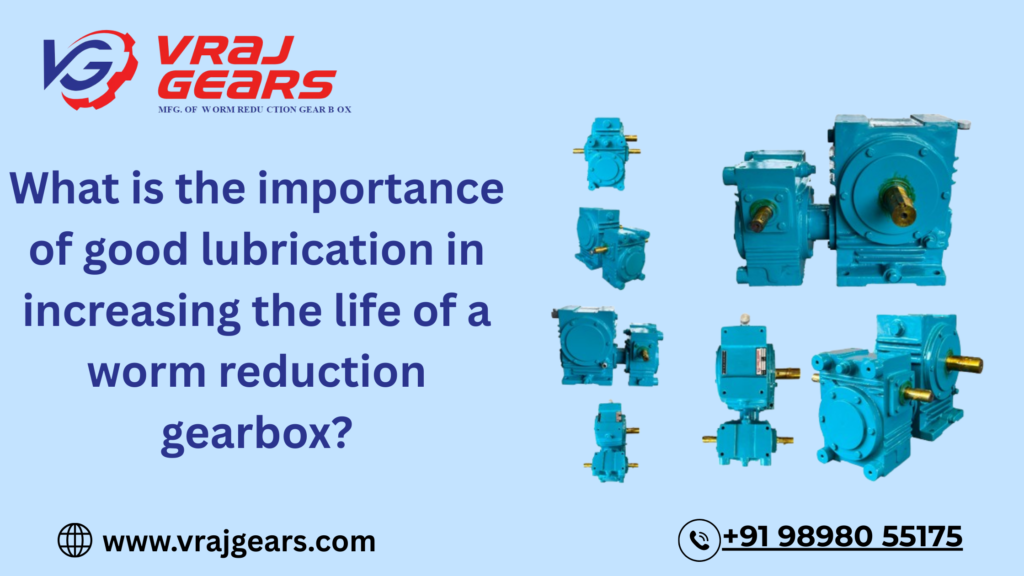
Worm reduction gearboxes are essential parts of factories, as they provide considerable speed reduction in a small size and are able to withstand a variety of tasks like driving conveyors, lifts, dosing systems and even packaging lines. Nevertheless, the combination of worm and gear results in sliding coming into play a lot (besides rolling), which thus makes it susceptible to higher friction, heat, and wear. To be on the safe side, good lubrication is not just recommended; in fact, it is the one and only biggest factor under your control that can actually lead to gearbox durability.
Function of lubrication
An appropriate lubricating agent creates a covering between the worm and the wheel which neutralizes the metal-to-metal contact. Consequently, there is wear reduction, lower operating temperatures, no pitting and scoring of the tooth surfaces, and protection of the bearings and seals. It is immediately the case that less repair work, shorter intervals of nonoperation, and more predictable service life are direct consequences of that.
Oil versus grease: which one to use?
The majority of worm industrial gearboxes tend to use gear and gear oils due to the ability of oils to dissipate heat better and because they are easier to filter and circulate. However, grease can work for low-speed, small units, or motors that are sealed, but it may also trap heat and cause wear in case of higher loads or speeds. It is essential to always adhere to the suggestions of gearbox manufacturers since some highly efficient synthetic oils (PAG or specially compounded gear oils) are even made for worm drives and do better than regular mineral oils in terms of performance under sliding conditions.
Additives and viscosity matter
Worm gears typically run in mixed or boundary lubrication regimes. That means choosing the right viscosity (ISO VG grade) and avoiding aggressive EP (extreme-pressure) additives that can react badly under constant sliding. Many technical guides warn against standard EP sulfur-phosphorus packages for worm gears because the wiping action can strip protective films; instead, use oils formulated for high-sliding applications or compounded worm oils.
Routine checks extend life
Simple maintenance steps, regular oil-level checks, condition monitoring (visual, smell, color, particle counts), scheduled oil changes, and keeping breathers and seals clean, prevent contamination and overheating. Manufacturers and standards bodies give oil-change or inspection intervals (for example, initial change after run-in, then periodic sampling or scheduled drains). Following those intervals and acting on oil analysis can add years to a gearbox’s life.
Real gains you can expect
When you match the right lubricant and follow good maintenance, you will see lower tooth wear, fewer unscheduled repairs, cooler sump temperatures, and often measurable improvements in gearbox efficiency and uptime.
FAQs
Q: How often should I change the oil in a worm gearbox?
A: Follow the manufacturer’s schedule, commonly an initial change after break-in (e.g., first 500 hours or 4 weeks) then periodic changes based on hours, temperature, and oil analysis.
Q: Can I use a general-purpose gear oil?
A: Not always. Worm gears need oils formulated for sliding contact. Avoid generic EP oils unless the product specifically lists worm gear compatibility.
Q: My gearbox runs hot, is that a lubrication problem?
A: Often yes. Overheating can come from wrong viscosity, low oil level, contamination, or too much load.