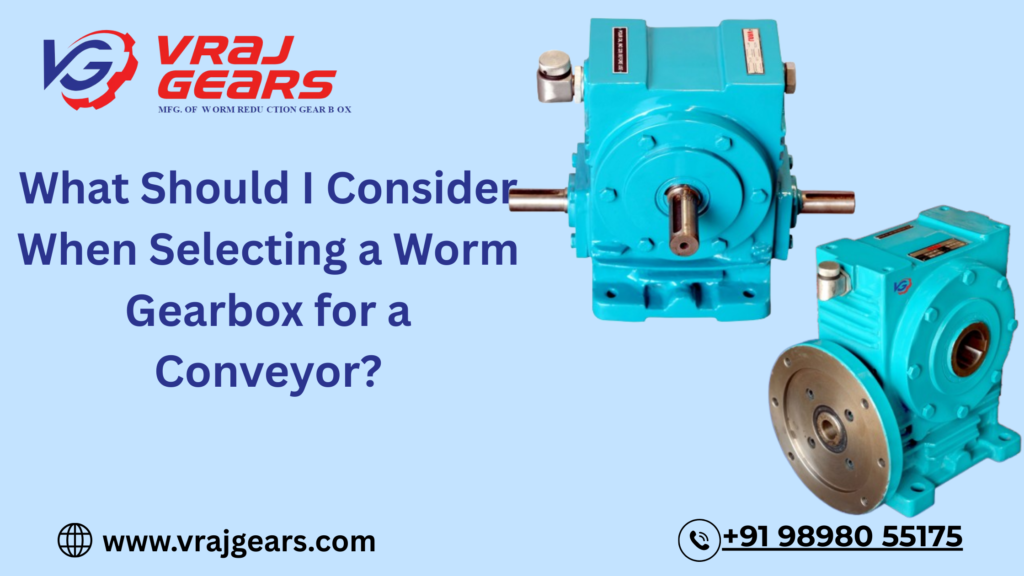
Conveyors play an essential role in the operations of any factory. They transport materials without any hassle from one point of production to another and thus contribute to the working floor’s efficiency, safety, and uniformity. Worm gearbox is a commonly used component in many conveyor systems. When you select a worm gearbox is more than a technical choice; it determines the performance, reliability, and maintenance cost of the system throughout its lifetime.
Consider the Conveyor Load and Torque Requirements
It is important to know the weight of the materials that the conveyor is going to carry first. It includes not only the weight of the materials but also the weight of the belt or chain, and additional forces like friction or resistance to the incline.
Low-speed torque of worm gearboxes is highly regarded, which is why they are preferred in the case of conveyors. Nevertheless, the gearbox rating needs to cover both the starting torque and the continuous operating load. The consequences of undersizing are overheating and wear and tear, while the consequences of oversizing are increased cost.
Pick the Right Speed Reduction Ratio
Conveyors commonly function at monotonic and controlled speeds. The worm gearbox reduction ratio is what dictates not only the velocity of the conveyor but also the nature of its start and stop, which will be smooth or not.
Whenever the right ratio is selected, there will be no more jerking during movement, hence the load on the motor and the mechanical parts is reduced. Moreover, a well-matched ratio not only increases efficiency but also minimizes stress on the gearbox during long operating hours.
Consider Duty Cycle and Operating Hours
Not all conveyors run the same way. Some operate for short intervals, while others run continuously across multiple shifts. Worm gearboxes used in continuous-duty conveyors must be designed for heat management and long-term reliability. If your conveyor runs around the clock, select a gearbox with higher thermal capacity and suitable lubrication to handle extended operation without performance loss.
Efficiency and Power Consumption
Worm gearboxes typically have lower efficiency compared to helical gearboxes due to their sliding contact. While this is expected, choosing a high-quality gearbox with proper materials and lubrication can help reduce energy losses. For conveyors that operate for long hours, even small efficiency improvements can lead to noticeable energy savings over time.
Concluding
By considering load, speed, duty cycle, environment, and maintenance needs, you can ensure smooth conveyor operation and long-term reliability. A well-chosen worm gearbox not only supports production efficiency but also reduces overall ownership costs.
FAQs
- Why are worm gearboxes commonly used in conveyors?
They provide high torque at low speeds, making them ideal for smooth and controlled conveyor movement. - How do I know if a worm gearbox is correctly sized for my conveyor?
It should handle both starting torque and continuous load without overheating or excessive wear. - Does the factory environment affect worm gearbox selection?
Yes. Dust, moisture, temperature, and operating conditions influence sealing, materials, and overall gearbox durability.